Drain The Ocean Wartime wrecks on a drained seafloor
D-Day, Pearl Harbor, U-boats, and Bikini Atoll — surveys, not salvage maps.
Twentieth-century wars left a unique archaeological layer in the sea: steel hulls, aircraft, and landing craft in known battle areas. Drain the Oceans returns to that layer often because the sites are documented, the wrecks are large, and sonar loves metal. This page groups the main clusters. The National Geographic mega-episode in the middle is a World War II compilation from the network’s own channel.
D-Day wrecks off Normandy are the cleanest example of a mapped battlefield. Season 2 opens with “Secrets of D-Day” (3 June 2019). Mulberry harbours, tanks that never made the sand, and landing craft sit in water shallow enough for divers and dense enough for a landscape-scale drain. These are war graves. So are many U-boat losses in “Killer U-Boats” and “Hitler’s Killer Warships,” and so is USS Arizona in Pearl Harbor (season 5, 6 December 2022). This wiki describes the films and the public surveys. It does not publish “how to find” lists for souvenir hunters.
Pearl Harbor, the Pacific, and the atomic fleet
Pearl Harbor’s Arizona remains where she sank on 7 December 1941. Drain CGI is used to show the hull’s shape and the harbour floor, not to reopen a memorial as a playground. Pacific hours — “Pacific War Megawrecks,” “Pacific Shockwave,” “The Last Wrecks of WWII” — cover a wider, deeper set of sites, including waters where Japan and the United States lost capital ships. Data quality varies. Some wrecks have been the subject of dedicated expeditions (including later well-known deep dives that sit outside the TV series). Others are still a magnetic anomaly.
Bikini Atoll’s “Atomic Ghost Fleet” (season 3, 5 May 2020) is a different kind of wartime layer: ships assembled as nuclear targets in 1946 (Tests Able and Baker) and left in a lagoon that is now a dive site and a political story. Drain CGI can show how Baker’s underwater burst rearranged hulls. It cannot settle the health and displacement history of the Marshallese, which belongs in other archives.
Nazi-secret hours and “Drain the Ocean: WWII” specials hunt U-boats and hidden programmes. Treat sensational titles as television. Cross-check any named hull against a navy history or a published survey before you repeat a “lost wonder-weapon” claim. The episode guide gives original titles so you can find the hour rather than a recap blog.
Depth bands and neighbouring pages
Normandy and Pearl Harbor are shallow compared with Titanic. Some Pacific wrecks are not. None of them is Challenger Deep. If a social clip smash-cuts from Arizona to a trench, you have changed subjects. Geology of the basins is on seafloor. Method is on how mapping works. Cities that drowned without a battle are on sunken cities.
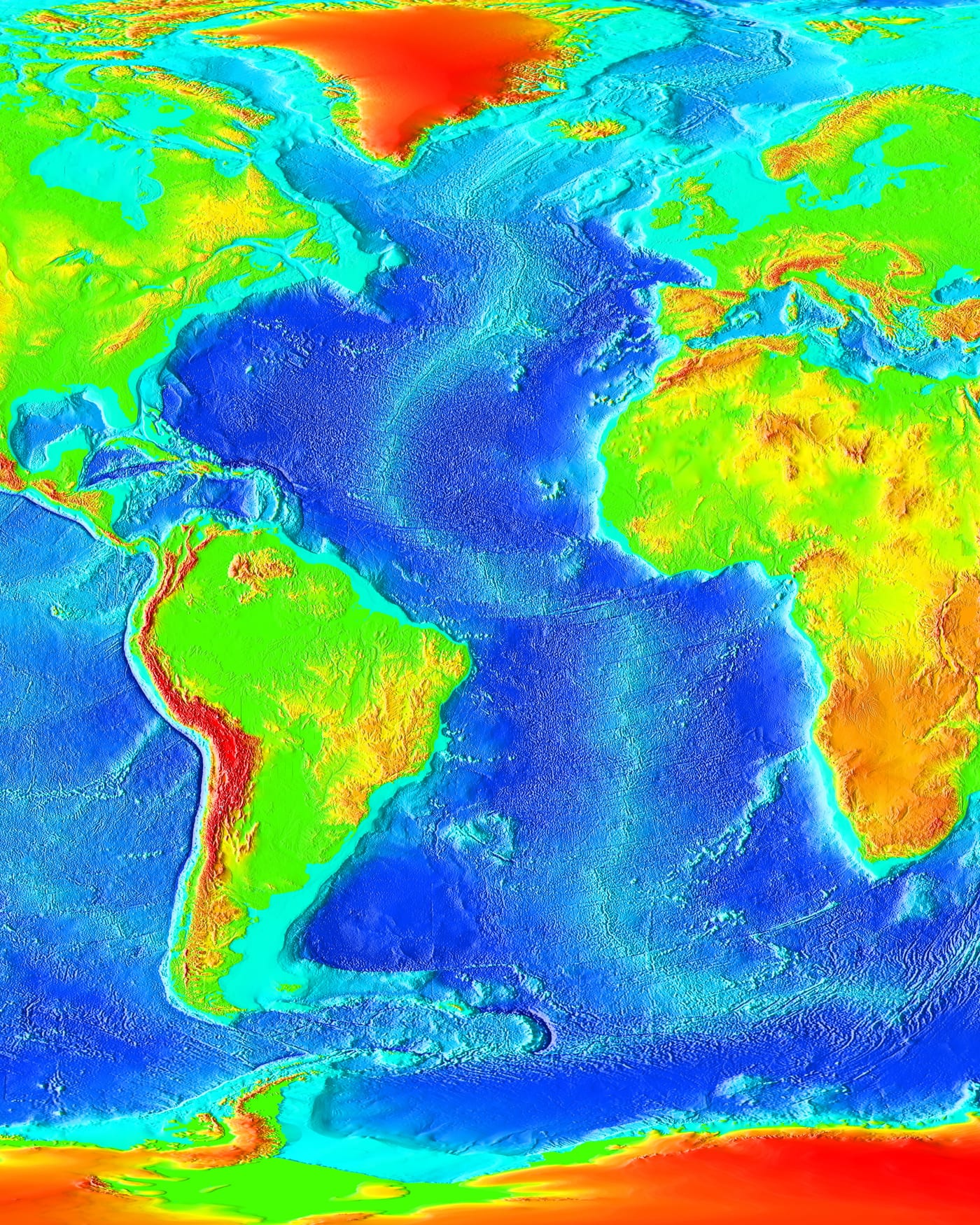
The North Atlantic ridge visible in this page’s hero image is the tectonic backdrop for U-boat hours, not a wreck itself. The ridge page is mid-ocean ridge. Ice-age shelves that armies never fought over still matter for where wrecks sit: a harbour that was a plain at LGM is a harbour now because the sea came back (ice-age coasts).
Watch wartime hours as marine archaeology and as memorial. Then read a primary history of the battle. The drain is a camera. It is not a verdict on who won.
Sources: National Geographic episode descriptions and WWII mega-episode; Wikipedia Drain the Oceans tables; public Pearl Harbor and Normandy heritage materials; Operation Crossroads literature for Bikini.
Frequently Asked Questions
Quick answers drawn from the pages on this wiki.
Is USS Arizona in Drain the Oceans?
Yes. Season 5 includes a Pearl Harbor hour (6 December 2022). Treat the wreck as a memorial, not a playground. See this page.
Are D-Day wrecks deep?
They are shallow compared with Titanic. That is why divers and sonar both work there. Method: how mapping works.
Does this wiki give GPS pins for war wrecks?
No. Many are graves. Use official heritage and navy channels. More sites: wrecks hub.