Drain The Ocean Draining the Titanic wreck site
Twelve thousand feet down, mapped, then lit as if the Atlantic had been pulled away.
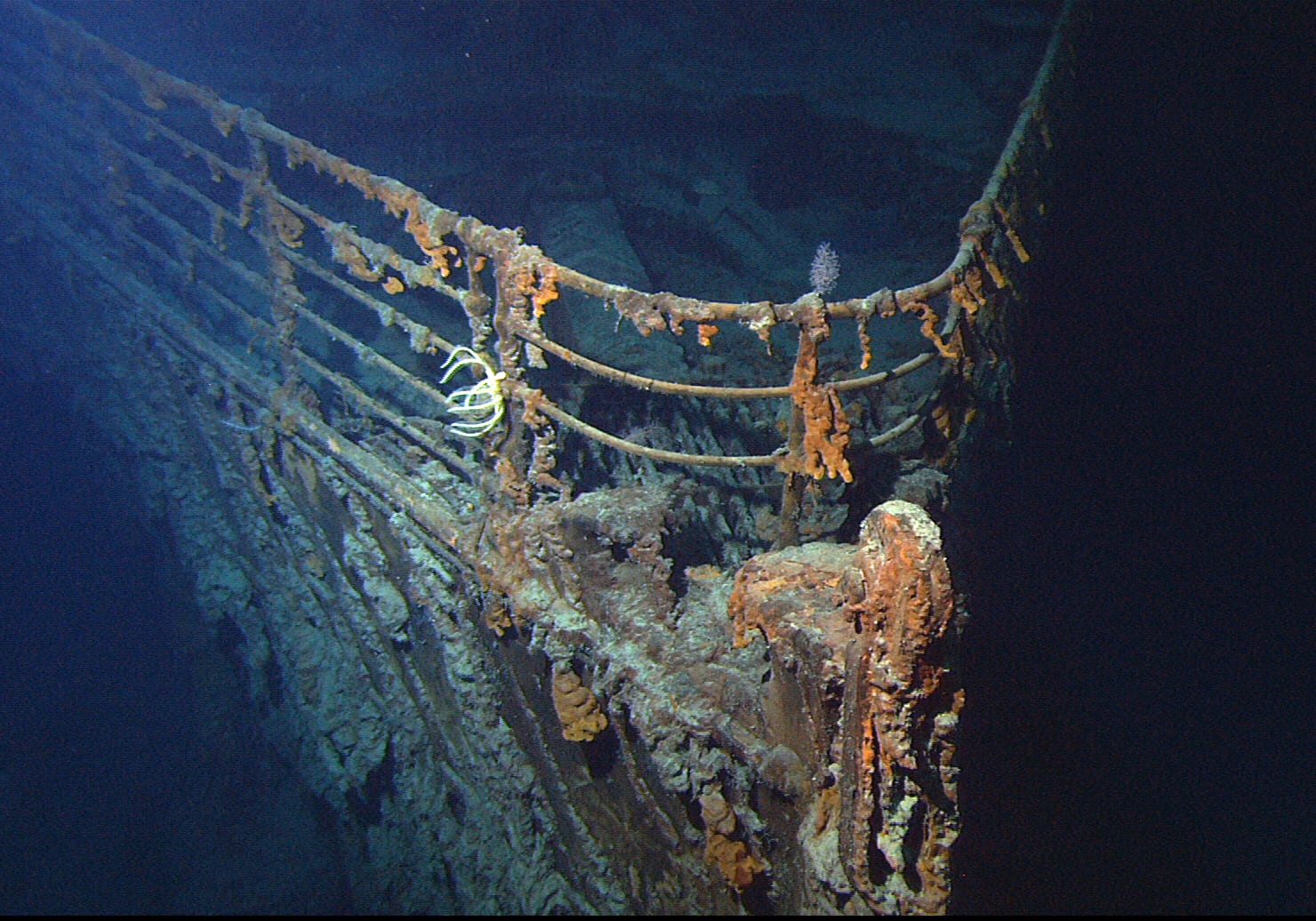
RMS Titanic sank on 15 April 1912 after striking ice in the North Atlantic. The wreck lies about 400 miles (roughly 640 km) southeast of Newfoundland, at a depth National Geographic copy often rounds to 12,000 feet — about 3,800 m. That is the average-ocean neighbourhood, not a trench. Robert Ballard’s team found the wreck in 1985. Since then the site has been dived, photographed, and, in 2010, mapped at a density that let Drain the Titanic and later Drain the Oceans hours reconstruct the debris field in CGI daylight.
The National Geographic episode embedded in the middle of this page is the series’ Titanic investigation: virtually draining the site to show bow, stern, and scatter as a single landscape. A precursor special, Drain the Titanic, used the 2010 mapping and argued from that data that the iceberg damage was on the order of 10–12 square feet rather than a 300-foot gash, and that the ship broke in two well on the way down. Those claims belong to the filmmakers’ analysis of the sonar. They are part of a long argument with eyewitnesses who said they saw the break at the surface. This wiki reports both the film’s reading and the fact that it is a reading.
What a drained Titanic is good for
A drained camera move shows slope, run-out, and the gap between the two main hull pieces. It shows gouges in the sediment where the bow hit. Popular commentary from the special’s trailer notes impact speeds on the order of 35 mph for the bow and a faster, corkscrew stern — again, film analysis, not a new black-box. James Cameron’s later National Geographic hours (including Titanic: 25 Years Later) are a different project: experiments and myth-busting, not a drain. Bob Ballard’s remark that you will not find skeletons, only shoes whose tannic-acid treatment survives, is biology at depth, not CGI.
Titanic is not a treasure hunt on this wiki. Artefacts have been recovered under legal regimes this page does not practise. The wreck is deteriorating. Repeat visits have a cost. A drain film is one way to look without another landing. It is still a model. Unmapped pockets of the debris field remain. Vertical exaggeration and lighting choices can make a boiler look like a building.
How this site uses the wreck
Read how mapping works for the sonar-to-CGI path. Read what if we drained the ocean if you thought Titanic sat in a trench. Read wartime wrecks for hulls that are graves from later wars. The episode guide places Titanic-related hours among specials rather than as a numbered season-1 episode. The 2009 special barely uses Titanic; it is a geology film.
Depth comparisons help. Port Royal is a harbour city in tens of metres (sunken cities). Challenger Deep is nearly 11 km (trenches). Titanic’s 3.8 km is a long way down for a diver and a modest dent in the hypsographic curve. A 120 m ice-age drop would not have exposed the wreck; the site was deep in 1912 and would have been deep at LGM.
If you watch only one drain hour in your life, this is a reasonable choice: the data pedigree is public, the wreck is famous enough that errors get challenged, and the CGI is doing the job the 2009 special invented — showing shape that darkness hides. Then go and look at a grid on maps so you remember what the pretty picture is made of.
Sources: National Geographic Titanic episode descriptions; Drain the Titanic production notes as summarised in public trailers; Ballard 1985 discovery; IMDb and Wikipedia related-productions lists.
Frequently Asked Questions
Quick answers drawn from the pages on this wiki.
How deep is the Titanic?
About 3,800 m (often given as 12,000 feet), some 400 miles southeast of Newfoundland. Not a trench. See this page and what if.
When was the wreck found?
1985, by a team led by Robert Ballard. Mapping dense enough for drain CGI includes a 2010 survey used in *Drain the Titanic*.
Is the YouTube episode official?
The embed is National Geographic’s own “Investigating the Titanic” upload. Other re-uploads are not used here. More hours: episode guide.