Drain The Ocean Where this wiki’s facts come from
Agencies, papers, and catalogues — not anonymous drain videos.
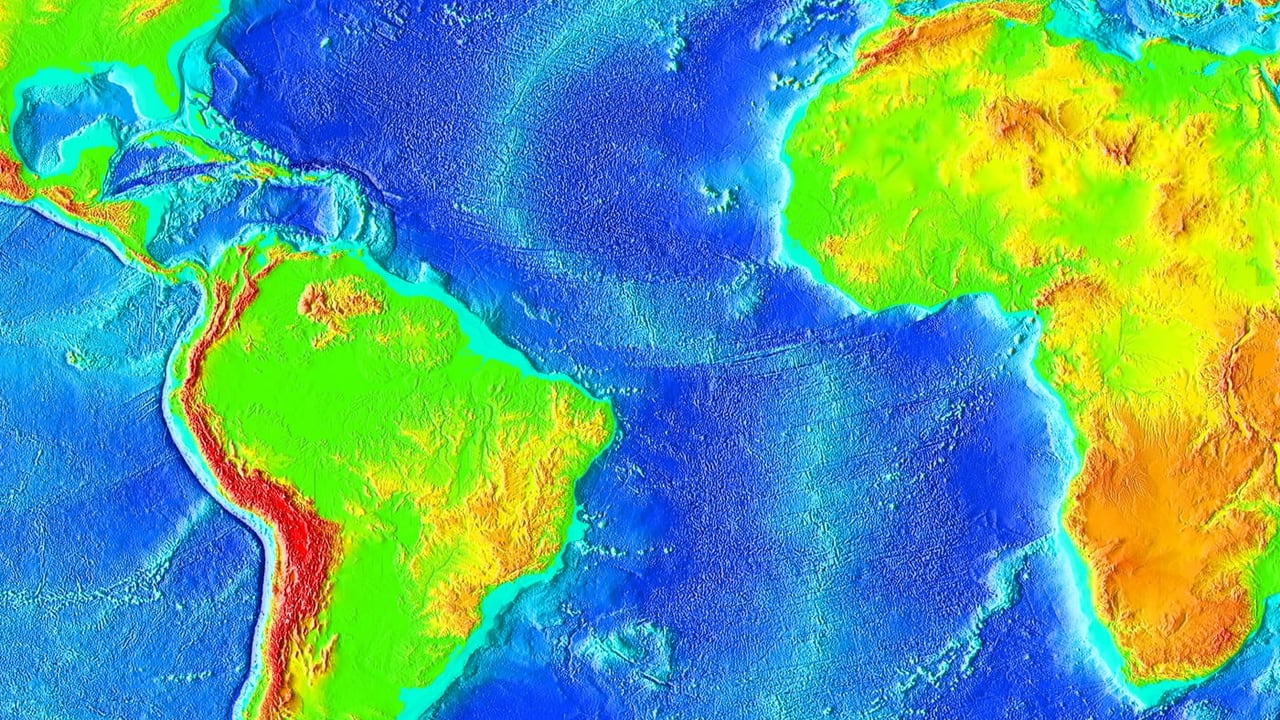
This encyclopedia is independent of National Geographic. It still has to be sourced. Episode titles and air dates come from public catalogues. Depths and volumes come from papers. Mapping percentages come from Seabed 2030 and GEBCO. Images on this site come from public-domain agency posters, credited on data credits. If a sentence on a wreck page or a geology page cannot be traced to one of those classes, it does not belong here.
Use this hub as a bibliography, not as a streaming app. For hours and seasons, start with the series hub and the episode guide. For grids, start with GEBCO and NOAA. For the latest coverage number, start with new discoveries. For how CGI is assembled, start with how mapping works.
Classes of source this wiki prefers
First, official and agency products: GEBCO grids and documentation; NOAA NCEI ETOPO and bathymetry notes; IHO and Seabed 2030 coverage releases; heritage agencies when a wreck is a grave or a protected site. Second, peer-reviewed measurements: Charette and Smith (2010) for mean depth and volume; Greenaway and colleagues (2021) for Challenger Deep pressure; Clark and Mix (2002) and Lambeck and colleagues (2014) for Last Glacial Maximum eustatic sea level. Third, production facts that can be checked in public catalogues: IMDb tt1485703 for the 2009 special; Wikipedia’s Drain the Oceans page as a digest of National Geographic, TV Tonight, and The Futon Critic listings, which this wiki then treats as a map to original titles, not as a primary instrument.
We do not treat a YouTube comment as a depth. We do not invent file numbers. We do not publish salvage coordinates. We do not pretend a CGI still is a photograph. When an episode reconstructs Port Royal or Titanic, the source is the survey the producers cite plus the agency that hosts the regional grid — filed on sunken cities and Titanic, not as a treasure map.
How to read a citation on a page
Each English article ends with a short sources line. That line is a trail, not a full academic bibliography. Mean ocean depth about 3,682 m always means Charette and Smith 2010 unless a page says otherwise. 28.7% mapped always means Seabed 2030 as of April 2026 until updates records a newer share. 120–135 m ice-age drop always means the eustatic range from the papers above, expanded on ice-age coasts and ice-age maps. Challenger Deep always carries a range, not a fake centimetre, on trenches.
Streaming availability is the least stable class. Disney+, Hulu, National Geographic, and Tubi appear in listings and rotate. Where to watch is the page that says so. JustWatch-style indexes are a starting point, not a contract.
What this wiki is not citing
It is not citing other fan wikis as authority. It is not citing unsourced “drain the ocean” games. It is not citing machine-written listicles that copy IMDb without the 2009/2018 title split. The getting started guide exists because that split is the first error searchers make. Production companies — Burning Gold for 2009; Mallinson Sadler and Electric Pictures for the series; 422 South for VFX — are named because public credits name them, not because this site is affiliated.
If you need the image files themselves, go to data credits. If you need the landforms, go to Seafloor. If you need the thought experiment, go to what if. If you need the television catalogue, go back to Series.
Sources for this hub: GEBCO; NOAA NCEI; Seabed 2030; Charette and Smith 2010; Greenaway et al. 2021; Clark and Mix 2002; Lambeck et al. 2014; IMDb tt1485703; Wikipedia “Drain the Oceans” as a pointer to National Geographic and listing services.
Frequently Asked Questions
Quick answers drawn from the pages on this wiki.
Is this wiki affiliated with National Geographic?
No. It is independent. Trademarks stay with their owners. See the footer and the terms page.
Where do the depth numbers come from?
Papers and agency products cited on each page. Mean depth is Charette and Smith 2010. Challenger Deep is quoted as a range on trenches.
Where are the image credits?
On the data credits page: NOAA, GEBCO-related public posters, and Wikimedia file names.