Drain the Ocean (2009)
The National Geographic special that pulled an imaginary plug on the global ocean.
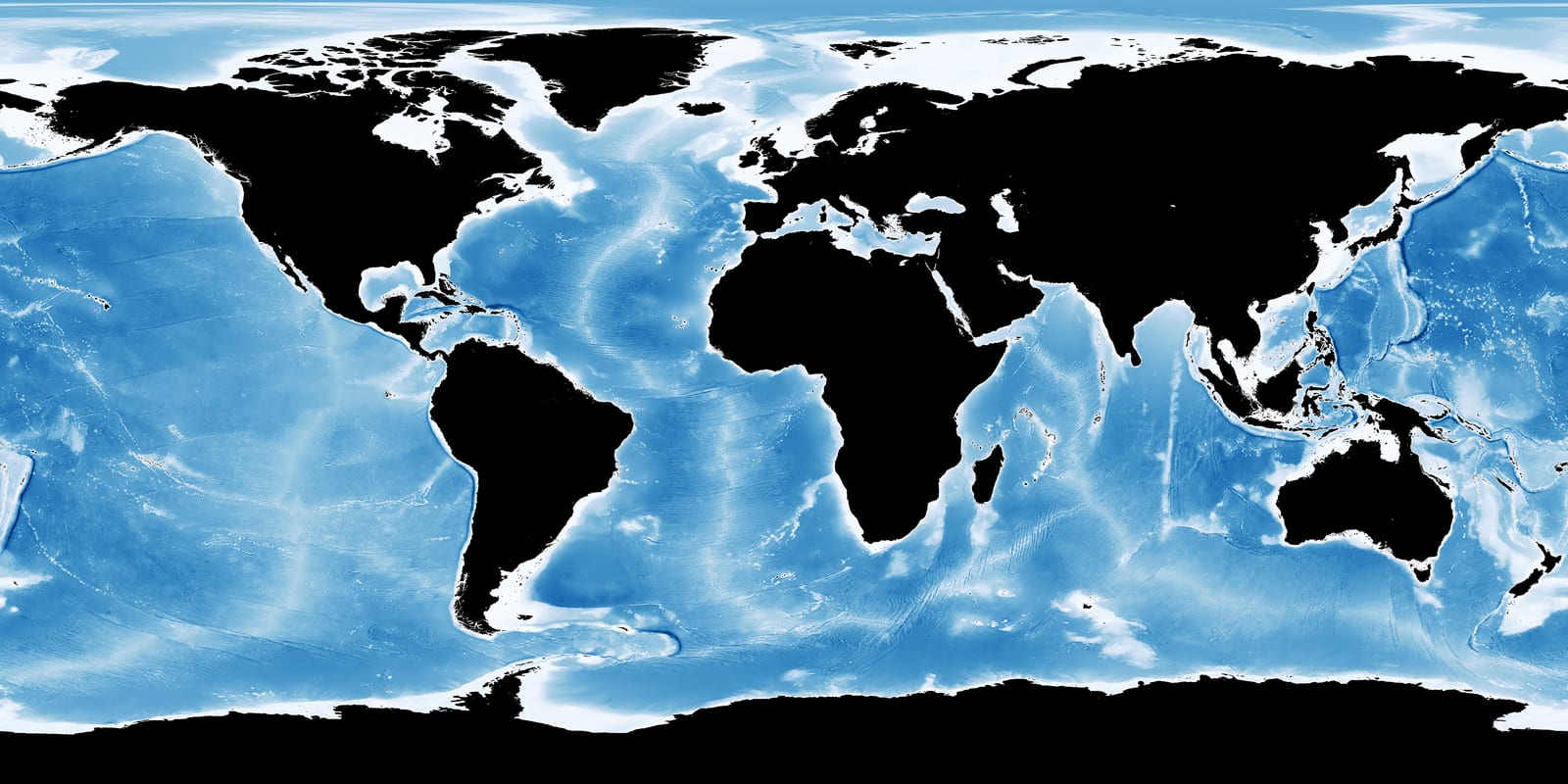
Drain the Ocean is a National Geographic Channel television special first shown in the United States on 9 August 2009. IMDb lists it as a TV movie (tt1485703), TV-G, about 88–90 minutes depending on the cut. Burning Gold Productions made it for National Geographic Channel. Steve Nicholls is credited as producer and writer; Victoria Coules as writer; Peter Brownlee as editor; Kathleen Cromley as executive producer; Steven Faux as composer. Avery Brooks, known to many viewers from Star Trek: Deep Space Nine, narrates.
The opening lines, transcribed on IMDb, state the premise without metaphor inflation: scientists are mapping the seabed; the film combines that data with custom animation; then “we’ll pull an imaginary plug and drain all the water from the ocean.” The planet that remains is still Earth. The landscapes are ridges, plains, volcanoes, and canyons that sit under kilometres of water. Apple TV’s programme note adds the production credit © 2009 Burning Gold Productions and describes deep-water coral mounds that rival a city skyline, a submerged canyon larger than the Grand Canyon, and a mountain line around the globe for 40,000 miles — the mid-ocean ridge system.
What the 2009 film covers
Library catalogue chapter lists (Michigan eLibrary and others) give a reliable table of contents: surveying the ocean floor; Monterey Canyon; the centre of an ocean basin; slow deep life; deep-water coral; tectonic plate boundaries; transform offsets; the most extensive landscape on Earth; deep-sea vents; creature communities; a huge flat plain; mud volcanoes; subduction zones. That is a geology syllabus, not a wreck syllabus. If you arrived from a later Drain the Oceans hour about Pearl Harbor or Port Royal, this special is the parent film that taught the camera language.
Monterey Canyon, offshore California, is the Grand Canyon analogue the film leans on. The canyon heads close to the present shoreline. During the Last Glacial Maximum, when sea level stood on the order of 120 m lower, rivers could feed the canyon more directly. A commenter on Top Documentary Films noted that point in 2011; the ice-age coasts guide puts numbers on it. The film’s CGI of the mid-ocean ridge — a 65,000 km volcanic chain in some popular summaries, about 40,000 miles in the Apple TV copy — is the same feature mapped on the mid-ocean ridge page. Hydrothermal vents and the “slow lane” of abyssal life belong with abyssal plains and trenches only as neighbours: vents sit on the ridge, trenches sit at subduction zones, plains sit in between.
Scientists named in IMDb credits include researchers from the Monterey Bay Aquarium Research Institute, the National Oceanography Centre in Southampton, NOAA, the Hawaii Undersea Research Laboratory, Duke University Marine Laboratory, and Lamont-Doherty Earth Observatory. Those affiliations are a pedigree for the interviews, not a claim that every grid cell in the animation is a ship sounding. In 2009, as now, most of a global seafloor picture mixed measured tracks with satellite-derived predicted depths. The mapping explainer and GEBCO and NOAA update that mix to the GEBCO_2026 grid and Seabed 2030’s 28.7% modern-mapping figure from April 2026.
How it differs from the 2018 series
Drain the Oceans (2018–2023) keeps the drain and aims it at shipwrecks, sunken cities, and wartime graves. The 2009 special rarely parks on a named hull. It is closer to a planetarium show of the ocean floor. Wikipedia’s series page lists the 2009 film among related specials rather than as season 1. This wiki follows that split: episode guide for the series; this page for the special; series hub for both.
The special is not a plan to empty the ocean. It does not model atmosphere loss, salinity catastrophe, or the weight of 1.332 billion km³ of water leaving the basins (Charette and Smith, 2010, still NOAA’s cited volume). For those thought experiments, use what if we drained the ocean. For the one large real drawdown in human prehistory, use ice-age coasts. For wrecks that later hours reconstruct, start at Wrecks.
DVD releases from National Geographic / Vivendi carry the subtitle “See what lies beneath our seas” and ISBN 9781426295829. Some discs include a bonus programme titled Into the Abyss. Runtime on retail listings is commonly 90 minutes; TheTVDB lists a 45-minute cut in one documentary slot — check the edition you have. Original audio is English. Foreign titles include the French On a vidé l’océan.
Watch this film first if you care why a drained-ocean picture looks the way it does. Then read getting started and open a map. The CGI will stop feeling like magic and start feeling like a grid with lighting.
Sources: IMDb tt1485703; Apple TV show notes; Michigan eLibrary / WorldCat-style DVD records; Top Documentary Films synopsis; Wikipedia related-productions list.
Frequently Asked Questions
Quick answers drawn from the pages on this wiki.
When did Drain the Ocean first air?
9 August 2009 in the United States, as a National Geographic Channel special. See this page and the series hub.
Who narrates the 2009 special?
Avery Brooks. The later series uses other narrators, including Craig Sechler and Russell Boulter. Credits are on IMDb tt1485703.
Is the 2009 film a season of Drain the Oceans?
No. It is a precursor special. Season 1 of the series begins 28 May 2018. Use the episode guide for the series.