Drain the Ocean series archive
The 2009 special and the six-season National Geographic series that followed.
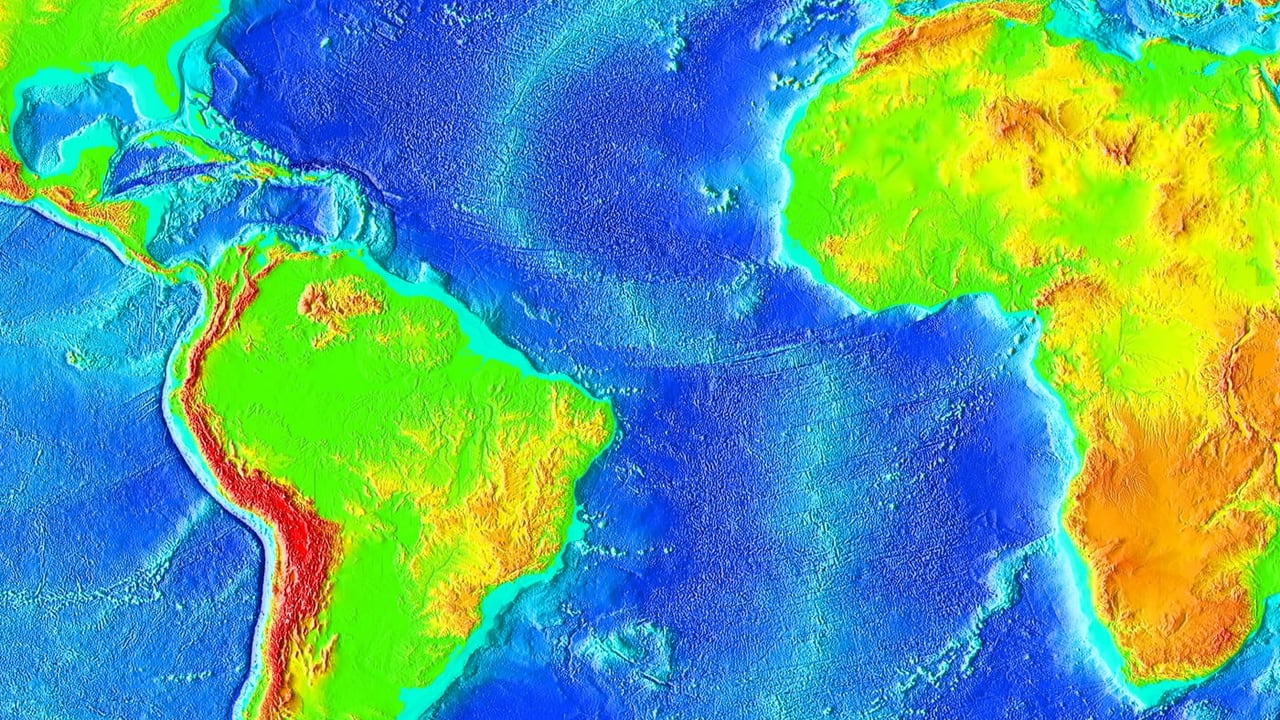
This hub is the catalogue for two related National Geographic projects that share a visual idea: remove the water, on a computer, and walk the seafloor as if it were dry land. The first is the 2009 television special Drain the Ocean. The second is the 2018–2023 series Drain the Oceans. Readers mix the titles; this wiki keeps them separate so episode lists and science claims stay traceable.
The 2009 special, produced by Burning Gold Productions for National Geographic Channel, is a geology and oceanography film. Avery Brooks narrates. Steve Nicholls produced and wrote; Victoria Coules co-wrote. It aired in the United States on 9 August 2009. IMDb lists it as a TV movie (tt1485703). Library records describe a roughly 90-minute DVD. The film asks what the planet would look like if you pulled an imaginary plug and used the latest bathymetry plus CGI to reconstruct ridges, canyons, plains, and vents.
The later series is a different production. Wikipedia, citing National Geographic and TV Tonight, records Drain the Oceans as an Australian and British documentary series that premiered on 28 May 2018. Mallinson Sadler Productions and Electric Pictures made it for National Geographic. Crispin Sadler and Andrew Ogilvie are among the executive producers. Narrators include Craig Sechler and Russell Boulter. The series ran six seasons and, on Wikipedia’s count, 63 episodes through 9 April 2023. Bristol studio 422 South was the primary visual-effects vendor.
How this archive is organised
Use the episode guide for season-by-season titles and original U.S. air dates drawn from The Futon Critic showatch listings that Wikipedia cites. Use the 2009 special page when you want Monterey Canyon, the mid-ocean ridge, abyssal plains, and hydrothermal vents rather than a wreck of the week. Use where to watch for streaming names that change by country — Disney+, Hulu, National Geographic, Tubi, and digital storefronts have all carried the series at various times.
The science underneath the pictures lives in Guides. The what-if explainer and the mapping page describe what a drained-ocean image can and cannot show. Wrecks from the series are grouped under Wrecks, including the Titanic, sunken cities, and wartime wrecks. Landforms are under Seafloor. Public data are under Maps.
What the CGI is doing
Neither project emptied a basin. Survey ships collect multibeam soundings. Satellites measure the sea surface, which sags and bulges over seafloor topography. GEBCO and NOAA stitch those sources into grids. The films drape lighting and camera moves on those grids, then add wreck models from sonar and photogrammetry. Last Pixel contributed more than 70 minutes of CGI for five episodes of season 2, according to Wikipedia. When an episode “drains” Port Royal or the Titanic, you are looking at a reconstruction with a stated data pedigree, not a newly photographed dry valley.
That distinction matters for searchers who arrive from “what if we drained the ocean” videos. A bathtub model that lowers sea level everywhere by the same number of metres is a teaching tool. It is not how water would leave a spinning, stratified ocean, and it is not how the National Geographic teams built wreck sites. The ice-age coasts guide covers the one large real drawdown: the Last Glacial Maximum, about 120–135 m of eustatic fall, with land bridges that are now shelves.
Precursors and specials
Drain the Oceans was preceded by National Geographic films that used the same visual language on smaller stages: Drain the Great Lakes, Drain the Titanic, Drain the Bermuda Triangle, and Drain the Sunken Pirate City. The 2009 special sits in that family as the global geology chapter. Later series episodes borrow the drain but aim it at history — D-Day wrecks, the Spanish Armada, Pearl Harbor, Venice, the Amber Room hunt, Bikini Atoll’s atomic ghost fleet.
If you only watch one hour of geology, start with the 2009 special. If you want a wreck catalogue, start with the episode guide and jump to Wrecks. If you want the numbers behind the pictures, open GEBCO and NOAA and the updates page.
Sources for this hub: Wikipedia “Drain the Oceans”; IMDb tt1485703; Apple TV programme notes for the 2009 special; The Futon Critic showatch listings; library catalogue records for the 2009 DVD (Burning Gold Productions).
Frequently Asked Questions
Quick answers drawn from the pages on this wiki.
Are Drain the Ocean and Drain the Oceans the same show?
No. Drain the Ocean is the 2009 special. Drain the Oceans is the 2018–2023 series. This hub links both. See the 2009 special and the episode guide.
How many episodes does the series have?
Wikipedia lists 6 seasons and 63 episodes, premiering 28 May 2018 and ending 9 April 2023, plus related specials. Titles and dates are on the episode guide.
Is this wiki affiliated with National Geographic?
No. It is an independent archive. Streaming and rights stay with National Geographic and its partners. See sources.